
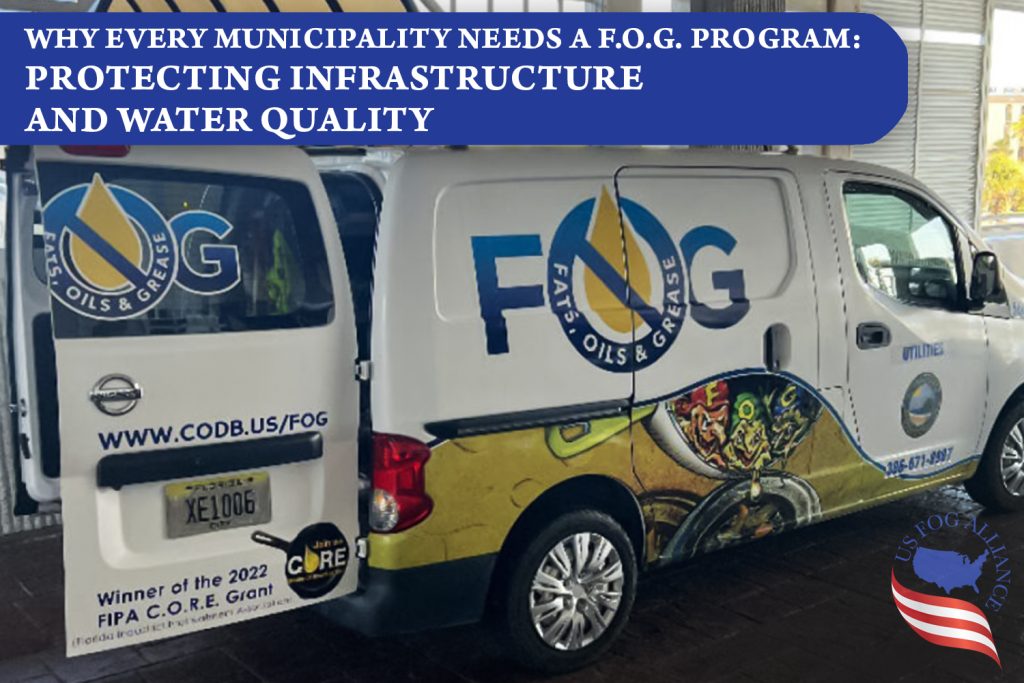
Why Every Municipality Needs a F.O.G. Program: Protecting Infrastructure and Water Quality
Municipal wastewater systems are among the most critical, and most expensive, infrastructure assets a community owns. Yet many cities and towns continue to battle against a preventable threat that damages sewer systems, increases maintenance costs, and threatens public health: Fats, Oils, and Grease (F.O.G.).
Whether generated by restaurants, commercial kitchens, food processors, institutions, or even residential households, F.O.G. remains one of the leading causes of sewer blockages and sanitary sewer overflows across North America. According to wastewater industry data and guidance from the U.S. Environmental Protection Agency, FOG accumulation is among the most common causes o f reported sewer system blockages and overflows.
For municipalities seeking to protect infrastructure, maintain regulatory compliance, and safeguard local waterways, a comprehensive F.O.G. management program is no longer optional, it is essential.
What Is a Municipal F.O.G. Program?
A municipal F.O.G. program is a coordinated effort designed to prevent fats, oils, and grease from entering the sanitary sewer system. These programs typically include:
- Ordinances and regulatory requirements
- Grease interceptor and grease trap standards
- Inspection and enforcement procedures
- Education and outreach initiatives
- Monitoring and reporting requirements
- Partnerships with food service establishments and commercial facilities
The goal is simple: stop grease before it becomes a costly problem.
The Hidden Cost of F.O.G. in Sewer Systems
When fats, oils, and grease are discharged into drains, they may appear harmless because they are liquid when warm. However, once they enter underground sewer lines, they cool and solidify. Over time, these materials adhere to pipe walls, reducing capacity, and eventually creating significant blockages.
The consequences can be severe:
- Sewer backups into homes and businesses
- Sanitary sewer overflows (SSOs)
- Emergency maintenance costs
- Premature pipe deterioration
- Increased treatment plant operating expenses
- Public complaints and liability exposure
- Increased cost to residents in the form of local, state, and federal tax dollars to fix/maintain these consequences
Municipalities often spend substantial resources responding to grease-related blockages that could have been prevented through proper source control and enforcement.
Protecting Public Infrastructure Investments
Most communities have invested millions, or even billions, of dollars in wastewater collection systems and treatment facilities. These systems are designed to transport wastewater efficiently, not to handle excessive grease accumulation.
Without a F.O.G. management program, municipalities often face:
- Increased sewer cleaning frequency
- Higher labor and equipment costs
- Accelerated wear on pumps and lift stations
- Reduced wastewater treatment efficiency
- Unexpected capital replacement projects
Industry professionals consistently note that preventing F.O.G. from entering the collection systems is far more effective and less expensive than trying to remove it after it has accumulated.
A well-managed F.O.G. program extends the life of existing infrastructure and reduces the long-term financial burden on taxpayers.
Environmental Protection and Water Quality
F.O.G.-related blockages do more than damage sewer systems. When sewer overflows occur, untreated wastewater can enter streets, storm drains, rivers, lakes, and coastal waters. This contamination introduces pathogens, nutrients, and pollutants into the environment.
The environmental impacts can include:
- Water quality degradation
- Damage to fish and wildlife habitats
- Beach and recreational water closures
- Increased nutrient pollution
- Threats to drinking water sources
Communities increasingly face public scrutiny regarding environmental stewardship. A proactive F.O.G. program demonstrates a municipality’s commitment to protecting local waterways and preserving natural resources.
Supporting Regulatory Compliance
Federal, state, and local environmental regulations continue to place greater emphasis on preventing sanitary sewer overflows and maintaining effective wastewater management practices.
A documented F.O.G. program helps municipalities:
- Demonstrate due diligence
- Meet regulatory requirements
- Reduce the likelihood of violations
- Support pretreatment program objectives
- Strengthen compliance reporting efforts
Many successful programs combine education, inspection, and enforcement to create measurable reductions in grease-related incidents while maintaining positive relationships with local businesses.
Public Health Benefits
When sewer systems fail, the risks extend beyond infrastructure and environmental concerns.
Sewer backups and overflows can expose residents, businesses, and municipal workers to untreated wastewater containing harmful bacteria, viruses, and other contaminants. These events create health hazards, generate public complaints, and can significantly damage community trust.
A strong F.O.G. program helps municipalities reduce these risks while protecting the health and well-being of their communities.
Building a Culture of Prevention
The most effective F.O.G. programs are not solely enforcement driven. They combine regulation with education and collaboration.
Successful municipalities often engage:
- Restaurants and food service establishments
- Commercial kitchen operators
- School districts and institutions
- Property managers
- Residents and homeowners
By educating stakeholders on proper grease disposal and maintenance practices, municipalities create a culture of prevention that delivers long-term results.
The Bottom Line
A municipal F.O.G. program is one of the most cost-effective investments a community can make in protecting its wastewater infrastructure.
By preventing grease from entering the sewer system, municipalities can:
- Reduced sewer blockages and overflows
- Extend the life of critical infrastructure
- Lower maintenance and emergency repair costs
- Improve environmental compliance
- Protect water quality
- Safeguard public health
- Strengthen community confidence
As wastewater systems continue to age and regulatory expectations increase, proactive F.O.G. management is no longer simply a best practice; it is a necessity.
Communities that invest in prevention today will spend less on emergency response tomorrow while protecting the infrastructure and natural resources that future generations depend upon.
Brian Smith, PhD
Director
United States Fats-Oil-Grease Alliance (USFOGA)